
A custom waterproof lithium battery pack is not created by placing ordinary cells inside a sealed box. Long-term reliability depends on the enclosure joints, cable exits, connector interface, gasket compression, pressure equalization, corrosion resistance, heat transfer and the way the battery is installed and serviced.
We develop project-specific Li-ion and LiFePO4 battery packs for outdoor equipment, marine electronics, monitoring systems, solar devices and field instruments exposed to rain, dust, humidity or occasional immersion. A waterproof LiFePO4 battery pack may prioritize cycle life and industrial durability, while a compact waterproof Li-ion battery can help when energy density and installation space are more important. Voltage and capacity are selected from the equipment load, while the enclosure and sealing method are developed from the real exposure rather than a marketing label.
This guide explains how IP67 and IP68 requirements differ, how connectors and cable glands become part of the waterproof boundary, when potting is useful, why sealed batteries need thermal and pressure review, and which tests should be agreed before production.
Define the Water Exposure Before Selecting an IP Rating
“Outdoor,” “waterproof” and “marine” are not complete engineering requirements. A battery installed under a sheltered solar panel faces a different risk from a battery exposed to wash-down jets, temporary flooding or repeated underwater pressure cycles. The first design step is to describe how water and contamination can reach the pack.
| Exposure condition | Information to provide | Why it changes the design |
|---|---|---|
| Rain and splash | Direction, intensity, duration and installation angle | Affects lid overlap, drainage, connector orientation and cable routing |
| Water jets or wash-down | Nozzle pressure, distance, direction, duration and cleaning frequency | Controls enclosure joints, gland selection and protection of exposed interfaces |
| Temporary immersion | Depth, duration, water type and number of events | Determines pressure across seals and the applicable test plan |
| Continuous immersion | Maximum depth, normal depth, duration and pressure cycles | Requires application-specific agreement beyond a general IP68 label |
| Condensation | Daily temperature change, humidity and warm-cold transitions | Can create moisture inside an enclosure without an external leak |
| Dust and mud | Particle type, exposure time and cleaning method | Affects seals, moving connectors, vents and service procedure |
| Salt or chemicals | Fresh water, seawater, salt spray, detergent, fuel or process chemical | Controls material, coating, connector and gasket compatibility |
| UV exposure | Outdoor hours, expected life and geographic environment | Affects plastic, cable jacket, label and seal aging |
The required protection level should be written together with the test conditions. “IP68 required” without immersion depth, duration, cable condition and connector state can lead to different interpretations between the equipment designer, battery supplier and testing laboratory.
What IP65, IP66, IP67 and IP68 Mean for a Battery Pack
Ingress Protection codes classify an enclosure’s resistance to solid objects and water under defined test conditions. The first digit relates to solid-particle protection and the second digit relates to liquid ingress. The rating applies to the tested enclosure configuration, not automatically to every battery made with a similar-looking case.
| Typical target | General meaning | Battery-project consideration |
|---|---|---|
| IP65 | Dust-tight enclosure with protection against water jets under the specified test | May suit rain and outdoor equipment when immersion is not expected |
| IP66 | Dust-tight enclosure with protection against more powerful water jets under the specified test | Can suit stronger wash-down exposure when joints and connectors are designed accordingly |
| IP67 | Dust-tight enclosure with protection during temporary immersion under the specified test | Depth, time, orientation and post-test inspection must be defined |
| IP68 | Dust-tight enclosure with protection for immersion conditions agreed for the product | Maximum depth, duration, water type, cycling and operating state must be stated |
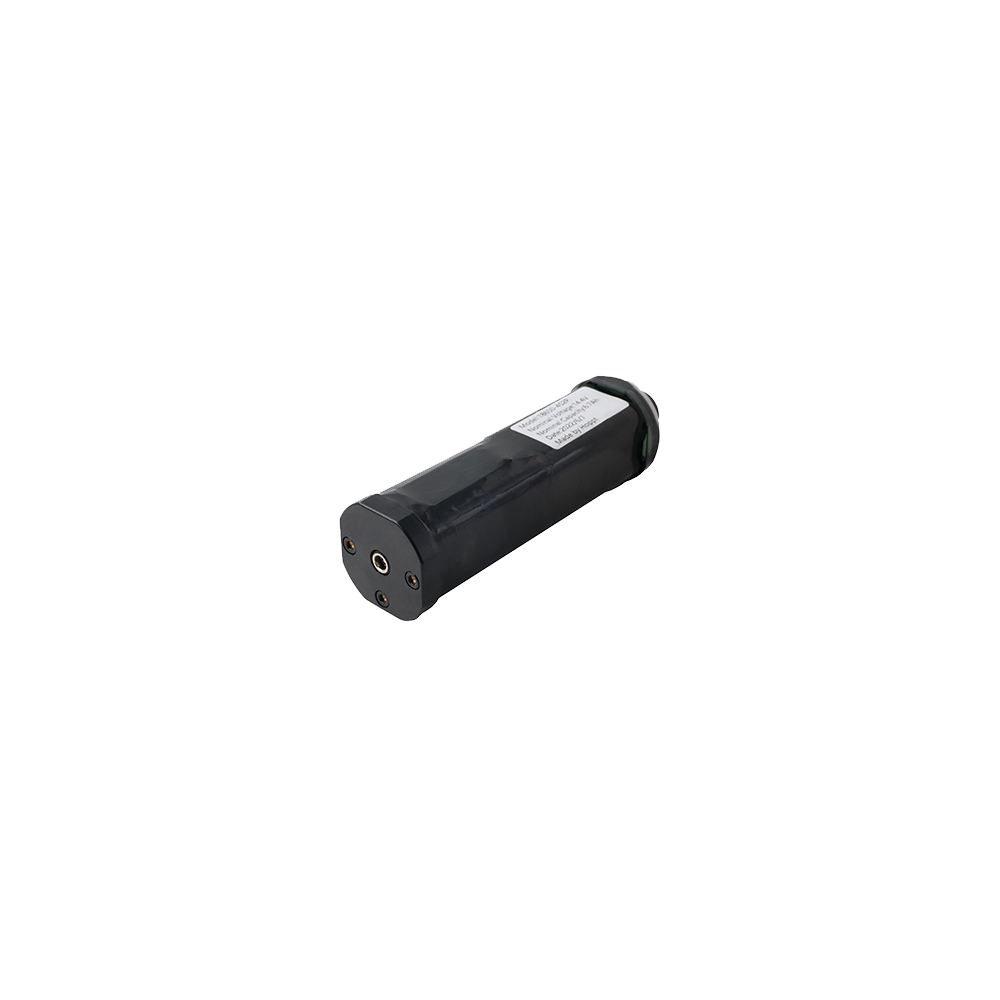
An IP67 battery pack is not automatically suitable for continuous underwater use. An IP68 lithium battery pack is also not universally suitable for every depth or time. A shallow long-duration installation, a deep short-duration dive and repeated pressure cycling are different engineering conditions even if the buyer initially describes all three as IP68.
The IP claim should cover the battery in its actual service condition. If a connector must be capped during the laboratory test but remains uncapped in operation, the result may not represent the installed product. Cable diameter, mating connector, vent, switch, display and service cover must all be included in the approved configuration.
Best-Fit Applications for a Waterproof Battery Pack
A custom waterproof battery is appropriate when a standard indoor pack cannot provide the required electrical interface, enclosure shape or environmental protection. Common applications include:
- Outdoor monitoring stations, data loggers and remote sensors
- Marine electronics, navigation beacons and deck-mounted instruments
- Waterproof battery packs for solar lighting and photovoltaic monitoring equipment
- Field inspection, surveying and emergency-response devices
- Agricultural, forestry and environmental monitoring equipment
- Outdoor access control, security and communications systems
- Underwater instruments and thruster systems with defined depth requirements
- Construction, utility and industrial equipment exposed to rain, dust or wash-down
- Portable devices requiring a sealed charging or power interface
The application determines more than the IP target. A navigation beacon may need UV resistance and long low-current operation, while an underwater thruster needs high current, pressure resistance and reliable connector sealing. A solar device may experience strong daily temperature cycling that causes condensation even when direct rain cannot reach the battery.
Select Li-ion or LiFePO4 from the Complete Requirement
A waterproof enclosure can be developed around Li-ion or LiFePO4 cells. Chemistry selection should follow voltage, energy, current, mass, cycle life, temperature and available space rather than the waterproof requirement alone.
- Li-ion using NMC-type cells: Often selected where compact size and energy density are important. Cell format can include cylindrical or pouch designs where suitable.
- LiFePO4: Often selected for industrial equipment where cycle life, thermal stability and frequent use are priorities. Its lower cell voltage changes series count for the required system voltage.
- Cylindrical cells: Can support flexible shapes and repeatable assembly but require careful insulation and connection design when many cells are used.
- Prismatic cells: Can reduce cell count in higher-capacity packs but need controlled terminal fastening, support and compression where required.
Voltage and capacity remain project-specific. A compact sensor battery may operate at a few volts and several ampere-hours, while a marine propulsion accessory or industrial outdoor system can require much higher voltage, energy and current. The enclosure should be designed only after the electrical and thermal architecture is understood.
12V, 24V, 36V and 48V Waterproof Battery Pack Options
Waterproof packs can be developed for several voltage platforms, but the label used by the equipment industry is not always the battery’s exact nominal or maximum charged voltage. A request for a 12V IP67 battery, for example, may lead to a 12.8V LiFePO4 configuration or an 11.1V Li-ion configuration depending on the load and charger. The series cell count must be confirmed from the complete operating-voltage window.
| Common platform | Typical custom applications | Items that must be confirmed |
|---|---|---|
| 12V waterproof battery pack | Remote sensors, solar controls, lighting and compact marine electronics | Chemistry, actual nominal voltage, charger limit and required IP test |
| 24V waterproof battery pack | Field instruments, communications equipment and industrial controls | Continuous current, connector, enclosure size and installation exposure |
| 36V waterproof lithium battery | Mobile equipment, pumps and higher-power outdoor systems | Peak current, cable size, heat dissipation and vibration |
| 48V waterproof LiFePO4 battery pack | Industrial mobile platforms, marine auxiliaries and remote power systems | Maximum voltage, smart BMS, communication, fuse and service isolation |
These are starting points rather than fixed catalog specifications. Capacity, current, dimensions, connector and ingress protection are engineered together. Using a standard indoor battery inside a separate waterproof battery box may work in some installations, but the box, cable entry, internal heat, mounting and service procedure still need system-level review.
Enclosure Material and Joint Design
The enclosure is the main waterproof boundary, but material alone does not define performance. Plastic, aluminum, stainless steel and coated fabricated structures can all be considered. The final choice depends on impact, pressure, corrosion, mass, thermal conductivity, production quantity and mounting method.
- Molded plastic: Can provide complex sealing features, electrical insulation and corrosion resistance. Resin selection must account for UV, temperature, chemicals and impact.
- Machined or cast aluminum: Provides structural strength and a useful thermal path but needs surface protection, controlled joints and corrosion review.
- Fabricated metal: Can suit larger or low-volume industrial packs, but welds, fasteners, panels and coating edges become potential leakage and corrosion points.
- Stainless steel: Can be considered for demanding corrosion environments, with attention to mass, fabrication, finish and galvanic interaction with other metals.
Lid flatness, wall stiffness, fastener spacing and gasket compression work together. A soft gasket cannot compensate for a flexible cover that lifts between screws. Fastener torque must create adequate and repeatable compression without deforming the housing or permanently damaging the seal.
Gasket Selection and Compression Control
Gasket performance depends on material, cross-section, compression, groove geometry, temperature and exposure. Silicone, EPDM, fluorocarbon and other elastomers have different resistance to UV, seawater, fuels, oils, cleaners and temperature. The gasket must be selected against the actual environment rather than by hardness alone.
- Continuous groove without unintended gaps or sharp transitions
- Controlled compression across corners and around fasteners
- Surface finish that does not cut or bypass the gasket
- Compression-set allowance across the required service life
- Material compatibility with salt, cleaning agents, oils and process chemicals
- Assembly features that prevent twisting, stretching or pinching
- Replacement instruction when the enclosure is opened for service
Adhesive or liquid sealant can supplement a joint, but it should not be used to hide uncontrolled surfaces or inconsistent assembly. Cure conditions, bead size, compatibility and rework procedure need to be defined for production.
Waterproof Connectors, Cable Glands and Cable Exits
A waterproof battery box can fail at the electrical interface even when its lid seal is excellent. Power connectors, signal connectors, charging ports, cable glands, switches and vents must meet the same environmental requirement as the housing.
| Interface | Items to confirm | Common risk |
|---|---|---|
| Power connector | Current, voltage, keying, mating cycles, sealed and unmated condition | Water enters through contacts or an uncapped receptacle |
| Signal connector | Pinout, shielding, communication, cap and mating connector | A low-current interface receives less sealing attention than the power connector |
| Cable gland | Cable diameter range, jacket material, torque and strain relief | The gland is rated but the actual cable is outside its sealing range |
| Overmolded cable | Bonding material, flex cycles, pull load and bend radius | Repeated bending creates a leak path at the cable exit |
| Charging port | Drainage, cap, contamination and live-contact behavior | Water remains inside the port after outdoor charging |
| Service cover | Fastener torque, gasket replacement and inspection | The enclosure passes initially but loses protection after maintenance |
Connector IP ratings can depend on whether the plug is fully mated or protected by a cap. The production specification should state the required condition. Cable glands must match the actual cable outer diameter and jacket; replacing the cable with a smaller or softer type can invalidate the seal.
Whenever possible, cable exits should face away from direct water collection and include a suitable drip path. Strain relief should prevent installation forces or vibration from being transferred into the seal.
Potting, Encapsulation and Conformal Coating
Potting can block water paths, restrain components and improve vibration resistance, but it changes heat flow, mass, repairability and pressure behavior. Full potting is not automatically the best solution for every waterproof lithium battery.
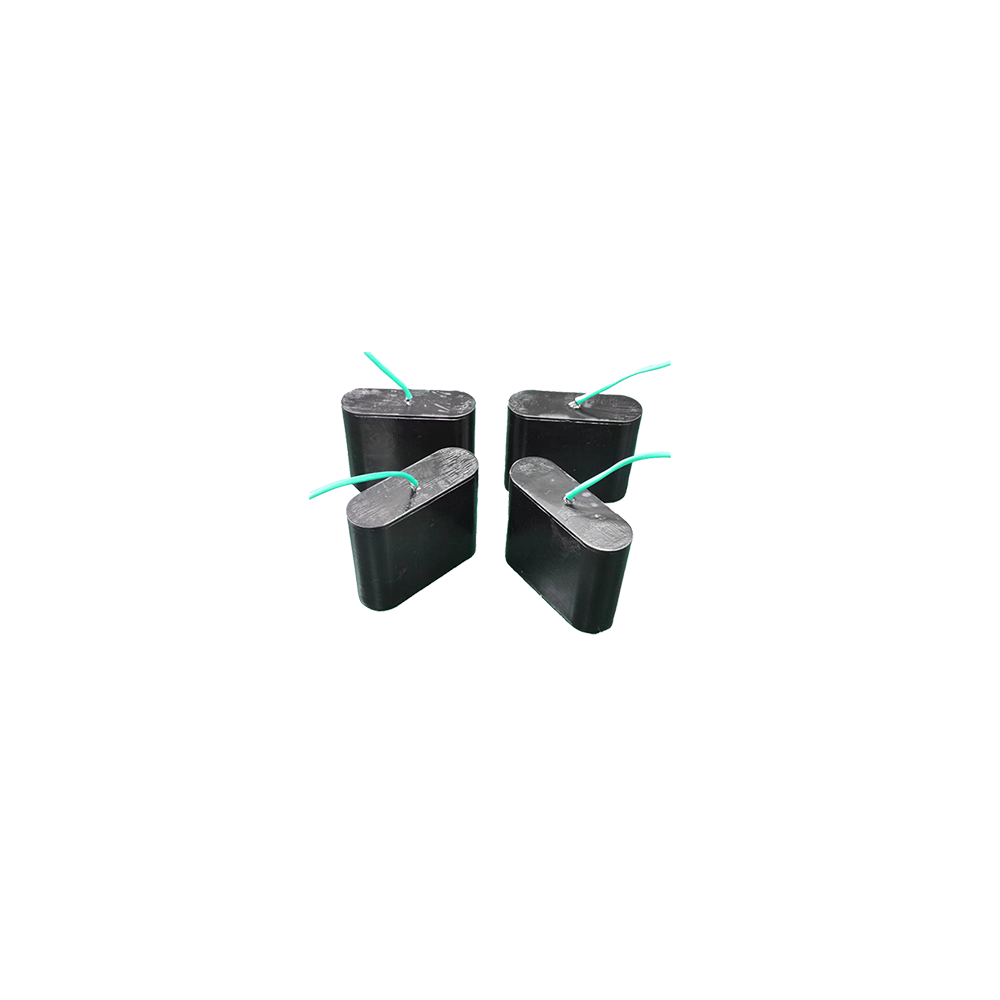
- Full potting: Can provide strong moisture and vibration protection but increases mass and makes cell or BMS replacement difficult.
- Partial potting: Can protect selected connections or cable exits while preserving some service access.
- Conformal coating: Can help protect circuit boards from humidity and condensation but does not make an enclosure waterproof by itself.
- Overmolding: Can create a durable sealed interface for compact modules when material adhesion and manufacturing control are validated.
Potting material must be compatible with cell sleeves, wire insulation, connectors, BMS components and enclosure material. Cure heat, shrinkage, trapped air and material stiffness can place stress on cells or connections. A potted pack also needs a defined failure and disposal strategy because internal components may not be serviceable.
Pressure Equalization, Condensation and Venting
A sealed enclosure experiences pressure changes when temperature or altitude changes. Heating during discharge can increase internal pressure; cooling or sudden rain can create negative pressure that pulls moisture toward seals. Repeated pressure cycling can gradually challenge joints that pass a single short water test.
A hydrophobic pressure-equalization vent may be considered where the application allows it. The vent must match the required airflow, water entry pressure, contamination environment and mounting orientation. It should not be added without checking whether it changes the specified IP test or underwater pressure requirement.
Condensation can occur when humid air is trapped during assembly or when the battery repeatedly moves between warm and cold environments. Dry assembly controls, humidity management, desiccant where justified, conformal coating and correct venting can be more effective than simply applying more sealant.
Battery safety may also require a controlled response to abnormal internal pressure or gas generation. The enclosure risk assessment must coordinate ingress protection with venting or pressure-relief requirements. A box should not be sealed more aggressively without considering fault pressure.
Thermal Management in a Fully Sealed Battery
Waterproofing reduces natural airflow, so heat generated by cells, the BMS, busbars, fuses and connectors must reach the enclosure through conduction. A battery that remains cool on an open bench can become too hot when sealed, potted and installed inside another cabinet.
- Continuous and peak discharge current
- Maximum charge current and charging duration
- Cell internal resistance and BMS conduction loss
- Enclosure thermal conductivity and wall thickness
- Potting or gap-filler thermal properties
- Contact area between heat-generating components and the housing
- Solar heating and maximum external surface temperature
- Installation against an insulating or heat-conducting equipment surface
- Maximum ambient temperature and daily temperature cycle
Thermal validation should measure representative cell locations, the BMS, high-current connections and enclosure surface under the actual duty cycle. If temperatures exceed the approved limit, the design may need a larger enclosure, lower current, conductive heat path, different cell or revised installation. Increasing the IP rating does not remove the need for derating.
Marine and Saltwater Design Considerations
A marine lithium battery needs more than water resistance. Salt deposits can retain moisture, accelerate corrosion and create conductive contamination. Material pairs, coatings, fasteners, connector contacts and cable shields should be evaluated for the intended marine exposure.
- Corrosion-resistant enclosure material and protective finish
- Compatible fasteners that reduce galvanic corrosion between dissimilar metals
- Sealed connectors with suitable contact plating and protective caps
- Cable jackets resistant to UV, salt, oil and expected cleaning agents
- Drainage that prevents standing saltwater around connectors or mounting feet
- Label and adhesive systems that remain readable after humidity and salt exposure
- Salt-fog or corrosion testing when required by the equipment specification
- Cleaning and freshwater-rinse instructions where appropriate
Marine use does not automatically mean underwater use. A battery mounted in a protected cabin, on an exposed deck or below the waterline has a different enclosure and safety requirement. The installation location must be stated clearly.
Underwater Depth Requires Pressure Design Beyond a Generic IP Claim
For underwater instruments, thrusters or monitoring equipment, depth and pressure are primary design inputs. External water pressure increases with depth and can deform covers, compress seals, stress cable entries and force water through very small defects. Repeated diving cycles can be more demanding than one static immersion.
The project should define normal depth, maximum depth, duration, number of cycles, descent rate, water temperature and whether the battery operates while submerged. Deep-water capability should be validated through an agreed pressure-chamber or equivalent test. An IP68 statement alone is not evidence for a specific deep-sea depth.
Pressure-resistant housings, oil compensation or other specialized structures may be required for demanding underwater work. These are separate engineering architectures and should not be assumed from a standard outdoor waterproof battery pack.
BMS and Electrical Protection for Outdoor Equipment
The BMS is selected from the cell configuration, continuous current, peak current, charge source and temperature range. Waterproof construction does not replace electrical protection. Depending on the project, the BMS can provide:
- Cell overvoltage and undervoltage protection
- Charge and discharge overcurrent protection
- Short-circuit protection
- Cell balancing
- Multiple temperature sensors
- Low-temperature charge protection
- State-of-charge indication or communication
- CAN, RS485, UART or project-specific interface
- External switch, wake-up or charger-control functions
- Fault logging and service information where required
Outdoor charging interfaces deserve the same environmental review as discharge connectors. Charger voltage and current must match the approved pack, and the charging port should not trap water or expose energized contacts. Where the application charges outdoors, the mated charger connection and user procedure must be included in the risk assessment.
Custom Waterproof Battery Specification Framework
| Item | Project-specific options | How it is confirmed |
|---|---|---|
| Voltage | Low-voltage or higher-voltage configuration according to equipment | Cell-count, charger and load-interface review |
| Capacity and energy | Defined from runtime, load, reserve, space and mass | Energy calculation followed by prototype discharge testing |
| Chemistry | Li-ion or LiFePO4 with suitable cell format | Current, energy density, cycle, temperature and safety review |
| Ingress target | IP65, IP66, IP67, IP68 or project-specific exposure requirement | Final enclosure test under agreed conditions |
| Immersion condition | Depth, duration, water type, orientation and cycle count | Specified immersion or pressure test |
| Enclosure | Plastic, aluminum, stainless or coated fabricated housing | Mechanical drawing, material review and environmental validation |
| Sealing | Gasket, sealant, welding, overmolding or project-specific combination | Assembly controls and leak or ingress testing |
| Connector and cable | Sealed plug, cable gland, overmold or fixed lead | Current, IP condition, pull, flex and mating review |
| Potting and coating | Full potting, partial potting or conformal coating where justified | Material compatibility, thermal and service review |
| Pressure control | Sealed, pressure-equalization vent or specialized pressure housing | Temperature, altitude, depth and fault-pressure assessment |
| Documentation | Specification, drawings, UN 38.3 planning, test summary and SDS/MSDS support | Final configuration, application and destination market |
The range above describes engineering options rather than a universal waterproof model. The approved production specification is released only after the cell, BMS, enclosure, seals, cable interface, thermal design and environmental tests are confirmed together.
Prototype and Waterproof Validation Plan
A prototype should be tested as a complete assembly using production-intent seals, connectors, cables and fasteners. A useful validation plan can include:
- Drawing and material review: Confirm joints, gasket, enclosure, connector, cable and coating specifications.
- Assembly inspection: Check sealing surfaces, gasket position, fastener torque, gland compression, strain relief and workmanship.
- Electrical test: Verify polarity, capacity, current capability, BMS protections, insulation and communication where applicable.
- Baseline leak check: Use an agreed pressure-decay, vacuum, tracer or other non-destructive method where suitable.
- Dust and water test: Perform the specified IP or project-specific exposure test on the final assembly condition.
- Thermal test: Record cell, BMS and connector temperatures during charge and discharge inside the sealed enclosure.
- Temperature cycling: Check seals and condensation through the required hot-cold transitions.
- Cable and connector test: Verify pull, flex, mating, cap and sealed-interface behavior.
- Mechanical test: Add vibration, shock, impact or mounting-load tests when required by the equipment.
- Corrosion test: Add salt-fog, humidity or chemical exposure for marine and industrial environments.
- Post-test inspection: Inspect for water, corrosion, seal damage, insulation change and electrical performance after exposure.
Environmental tests should be sequenced to represent use. For example, vibration or thermal cycling can be performed before a water test to determine whether aging and mechanical movement create a leak path. Passing a new, stationary enclosure once does not prove long-term field reliability.
Service Access and Maintaining the IP Rating
A serviceable waterproof battery needs a controlled opening and resealing procedure. Gaskets can be contaminated, stretched, cut or permanently compressed; sealing surfaces can be scratched; and fasteners can be tightened unevenly. The maintenance plan should specify:
- Who is authorized to open the enclosure
- Gasket inspection and replacement criteria
- Cleaning method for the sealing surface and groove
- Approved sealant and application quantity where used
- Fastener sequence and torque
- Connector-cap and cable-gland inspection
- Leak or ingress test required after service
- Label or tamper evidence showing that the enclosure was opened
A fully potted battery may avoid routine internal service but is harder to repair or reconfigure. Serviceability, expected life, field replacement and recycling should therefore be decided before potting is selected.
Certification and Export Documentation Planning
Ingress testing and lithium-battery transport compliance are separate requirements. An IP67 or IP68 report addresses the tested enclosure’s ingress performance under defined conditions. UN 38.3 addresses lithium-cell and battery transport testing; it does not certify the final outdoor or marine equipment for complete product safety.
Portable lithium batteries may require evaluation against IEC 62133-2 where applicable, while industrial secondary lithium batteries may be evaluated against IEC 62619 or another application-specific standard. Marine, underwater, hazardous-location or specialized equipment can have additional requirements beyond the battery itself.
Documentation support can include an approved battery specification, mechanical drawing, wiring information, label data, IP test planning or report support, UN 38.3 planning and test summary, SDS/MSDS and inspection records. CE, CB, UL or other claims are confirmed only after the final product, responsible manufacturer, destination and applicable test route are agreed.
Information Needed for a Custom Waterproof Battery Quote
- Equipment type and installation location
- Nominal voltage, capacity, energy or required runtime
- Continuous current, peak current and charge current
- Available battery dimensions, weight limit and mounting orientation
- Required IP level or detailed rain, jet and immersion condition
- Maximum depth, duration and number of pressure cycles for underwater use
- Fresh water, seawater, salt fog, detergent, oil or chemical exposure
- Operating and storage temperature
- Direct sunlight and UV exposure
- Connector model, mated or unmated sealing requirement and protective cap
- Cable type, outer diameter, length and exit direction
- Fixed, removable or serviceable enclosure requirement
- Potting, conformal coating or pressure-equalization preference
- Vibration, shock and corrosion requirements
- Destination market and applicable standard or test specification
- Prototype quantity, production forecast and schedule
Photos and sketches are helpful, but a drawing showing mounting, cable route and water exposure direction provides a better starting point. If the battery replaces an existing design, also provide photos of the original label, connector, enclosure joints and any known leakage or corrosion points.
Related Custom Battery Support
Review our complete custom battery pack engineering service, compare available models in the battery product catalog, explore outdoor and marine requirements under battery solutions, learn how packs are inspected through our battery quality control process, or send your waterproof battery requirements for an engineering review.
Frequently Asked Questions
Can a custom battery pack be designed to IP67 or IP68?
Yes, when the enclosure, gasket, connectors, cable exits, vents and service covers are designed and tested together. The final claim applies to the approved configuration and test condition, not to the enclosure shell alone.
Can you make a 12V IP67 battery or a 24V waterproof LiFePO4 battery pack?
Yes. Voltage, chemistry, capacity and IP target can be developed around the equipment. The charger voltage, maximum load current, enclosure dimensions, connector condition and exact water-exposure test must be confirmed before the series-parallel configuration and housing are approved.
Does IP68 mean the battery can work at any underwater depth?
No. IP68 immersion conditions must be defined for the product. Maximum depth, duration, water type, pressure cycles and operating state should be agreed and tested. Deep-water use requires pressure-specific design and validation.
Does waterproof construction make the battery run hotter?
It can. A sealed battery has less airflow, and potting can further change heat flow. Cell, BMS, busbar and connector temperatures should be measured at the required charge and discharge currents inside the final enclosure.
Can the power and charging connectors also be waterproof?
Yes. Sealed connectors, caps, cable glands or overmolded leads can be selected. The rating can depend on whether the connector is mated or capped, so the required operating condition must be stated in the specification.
Is a waterproof battery suitable for seawater?
Not automatically. Saltwater exposure requires additional review of enclosure material, coatings, fasteners, connectors, cable jackets, drainage and galvanic corrosion. A freshwater ingress test does not by itself validate long-term marine use.
Should the battery be fully potted?
Full potting can improve moisture and vibration protection, but it adds mass, changes heat dissipation and limits repair. Partial potting, conformal coating or a serviceable gasketed enclosure may be better depending on the application.
How do you prevent condensation inside a sealed battery?
Options can include dry assembly controls, humidity management, suitable conformal coating, desiccant where justified and a hydrophobic pressure-equalization vent. The solution depends on temperature cycling, altitude and the required ingress test.
Can a waterproof battery still be serviced?
Yes, if the enclosure is designed for controlled opening and resealing. Gasket condition, sealing-surface cleaning, sealant, fastener torque and a post-service leak test should be defined. Fully potted designs are generally less serviceable.
What information is needed to design a waterproof battery?
Provide voltage, capacity or runtime, current, dimensions, mounting, connector, temperature and the real water-exposure condition. For immersion, include depth, duration, water type and cycle count. Photos and equipment drawings help confirm installation details.
Is a waterproof lithium battery suitable for solar and outdoor monitoring equipment?
Yes, when the pack is designed for the actual rain, dust, condensation, UV exposure and temperature cycle. The charging profile from the solar controller, low-temperature charging limit, cable sealing and heat caused by direct sunlight should also be validated.