
A custom drone battery pack must balance flight time, weight, peak current, voltage sag, charging time and mechanical fit. Capacity alone does not predict how a battery will perform in the air. The same nominal watt-hours can produce different flight results when cell resistance, discharge rate, pack weight, temperature and connector loss are different.
We develop project-specific drone batteries for inspection UAVs, agricultural spraying drones, heavy-lift platforms, mapping systems and other unmanned equipment. Cell chemistry, series count, capacity, current path, wiring, connector, enclosure and monitoring functions are selected from the aircraft load and mission profile.
The objective is not to install the largest possible battery. A successful design supplies the required takeoff and maneuvering current, remains inside the flight controller voltage window, fits the battery bay, maintains safe temperatures and delivers repeatable fleet performance without adding unnecessary mass.
What Determines Drone Battery Performance?
Drone battery performance depends on the complete power system. Motors, propellers, payload, airframe mass, flight speed, wind, altitude and temperature all change current demand. Hover current is useful, but it does not describe takeoff, climb, acceleration or emergency maneuvering loads.
- Battery energy: Watt-hours indicate nominal stored energy, but only part of that energy may be usable within the approved voltage and reserve limits.
- Pack weight: Additional capacity can increase flight time only until the added mass creates too much propulsion demand.
- Current capability: Cells, interconnects, wiring and connectors must support continuous and short-duration peak current.
- Voltage sag: Internal resistance causes pack voltage to fall under load and can trigger an early low-voltage warning or landing.
- Temperature: Cold conditions can increase sag, while high current and repeated flights can create excessive heat.
- Mechanical integration: Retention, center of gravity, cable direction and connector access affect safe installation and handling.
For this reason, a flight-time target should be evaluated together with the current log, payload and maximum battery mass. A battery selected only from nominal capacity may be too heavy, too resistive or unable to supply the required power near the end of discharge.
Best-Fit Applications
A custom UAV battery is useful when an off-the-shelf drone battery does not match the voltage, bay dimensions, connector, current or mission requirements. Typical projects include:
- Industrial inspection drones for power lines, pipelines, buildings and infrastructure
- Agricultural spraying, seeding and crop-monitoring drones
- Surveying, mapping and photogrammetry UAVs
- Heavy-lift drones carrying sensors, tools or delivery payloads
- Long-endurance fixed-wing and VTOL unmanned aircraft
- Environmental monitoring, emergency-response and field-research platforms
- Custom unmanned systems requiring a defined enclosure or smart battery interface
Each application creates a different design priority. Agricultural drones may require rapid battery exchange, strong connector retention and resistance to dust or moisture. Inspection aircraft may prioritize energy density and low-temperature performance. Heavy-lift platforms need especially careful peak-current and thermal validation.
Define the Mission Profile Before Selecting Cells
The mission profile is the most useful starting point for a custom drone battery pack. It describes how the aircraft uses power over time rather than reducing the requirement to one maximum-current number.
| Mission input | Information to provide | Why it affects the battery |
|---|---|---|
| Aircraft mass | Empty mass, battery mass target, normal payload and maximum payload | Changes hover power, climb demand and useful energy-per-kilogram target |
| Flight phases | Takeoff, climb, cruise, hover, spraying or work phase, return and landing durations | Defines continuous and transient current instead of relying on one average value |
| Current data | Average, maximum and logged current over a representative mission | Determines cell loading, parallel count, conductors, connector and temperature rise |
| Flight-time target | Required airborne time, reserve policy and acceptable end voltage | Determines usable energy rather than nominal capacity alone |
| Environment | Temperature, altitude, wind, rain, dust and solar exposure | Affects delivered energy, cooling, sealing and mechanical materials |
| Ground operation | Charging time, turnaround time, battery swaps and daily cycles | Affects charge rate, cycle-life target, connector durability and fleet quantity |
If flight logs are available, voltage, current, temperature, state of charge and alarm events should be reviewed together. A short current peak may be acceptable, while a repeated high-current phase can accumulate heat and cause a different design decision.
LiPo vs. Li-Ion vs. LiFePO4 for Drone Batteries
The best chemistry and cell format depend on mission requirements. “LiPo” usually describes lithium-polymer pouch construction in the drone market, while “Li-ion” often refers to cylindrical cells such as 18650 or 21700. Both are lithium-ion systems, but their available shapes and performance options differ.
| Battery option | Where it can fit | Important tradeoffs to review |
|---|---|---|
| High-rate LiPo pouch cells | Multirotor platforms needing high power, compact shape and low structural mass | Actual C-rate, swelling allowance, mechanical protection, charge control and cycle target |
| Cylindrical Li-ion cells | Endurance-focused UAVs, fixed-wing aircraft and designs that benefit from established cylindrical formats | Peak-current capability, cell-holder mass, connection count, cooling and voltage sag |
| LiFePO4 cells | Projects prioritizing cycle life, stable chemistry or a specific industrial voltage platform | Lower cell voltage and energy density can increase cell count or pack mass for the same energy |
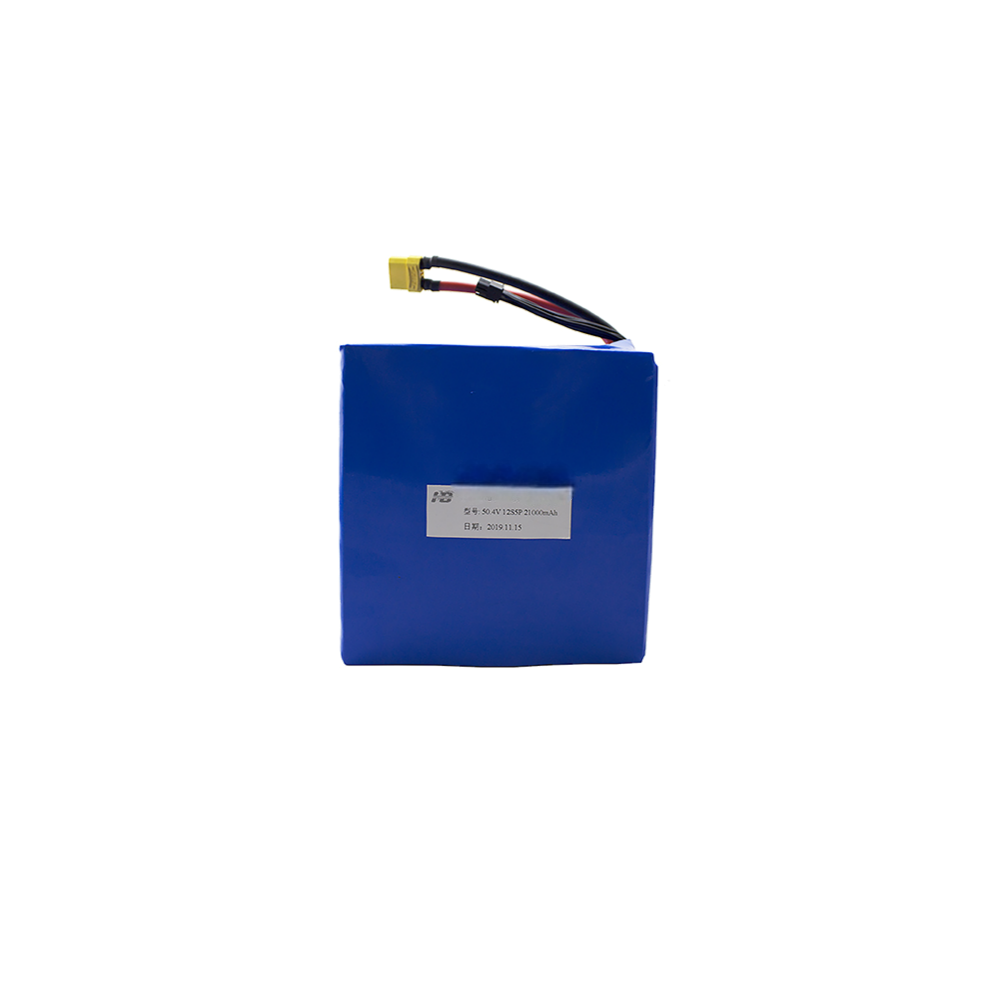
Neither LiPo nor cylindrical Li-ion is universally better. A high-energy cylindrical cell may improve endurance but fail a peak-current requirement. A high-rate pouch cell may supply excellent power but provide less energy per unit mass or a different cycle-life result. The comparison must use measured cell data at the expected load and temperature.
Drone Battery Voltage: 3S, 4S, 6S and Higher-Series Packs
Series count must match the motor, electronic speed controller, power distribution and charger. Many LiPo and conventional Li-ion cells are described as 3.7V nominal and 4.2V fully charged, although the exact cell datasheet controls the approved voltage limits.
| Series configuration | Typical nominal voltage | Typical fully charged voltage | Common design context |
|---|---|---|---|
| 3S | 11.1V | 12.6V | Compact drones and low-voltage UAV subsystems |
| 4S | 14.8V | 16.8V | Small and medium multirotor platforms |
| 6S | 22.2V | 25.2V | Higher-power multirotors and professional UAVs |
| 12S | 44.4V | 50.4V | Agricultural and industrial drone systems |
| 14S | 51.8V | 58.8V | Industrial platforms designed for the complete voltage window |
| 18S | 66.6V | 75.6V | Heavy-lift or special-purpose UAV power systems |
A controller described as “48V” cannot be assumed to accept every 12S, 13S or 14S pack. The fully charged voltage, minimum operating voltage, low-voltage alarm and reserve setting must all be compatible. Higher system voltage can reduce current for the same electrical power, but it also changes insulation, connector and charger requirements.
Capacity, Watt-Hours and Flight-Time Estimation
Amp-hours describe charge capacity. Watt-hours provide a more useful comparison between batteries with different voltages because nominal energy is calculated from voltage multiplied by amp-hours. Flight time still cannot be predicted from watt-hours alone because aircraft power changes with mass, payload and flight condition.
Illustrative energy calculation:
A 12S, 22Ah pack using 3.7V-nominal cells has a nominal voltage of approximately 44.4V.
44.4V × 22Ah = 976.8Wh nominal energy
Actual usable energy is lower after allowing for the approved discharge endpoint, reserve, current, temperature, voltage sag, conversion losses and aging.
This example explains the relationship only. It is not a flight-time or battery-size recommendation.
A preliminary flight-time estimate can compare usable battery energy with measured average electrical power, but the result must be validated in the aircraft. Adding battery capacity also adds mass, which can raise hover power and reduce the expected benefit. The most reliable optimization uses flight logs from several battery weights and representative payloads.
C-Rating and High-Discharge Drone Batteries
The C-rating describes current relative to capacity. In a simplified calculation, a 10Ah pack rated at 5C would correspond to 50A. This relationship does not prove that the battery can continuously deliver 50A inside the final aircraft.
Actual continuous and burst capability must be limited by verified cell data, pulse duration, temperature, voltage sag, interconnects, BMS or protection design, wires, connector and enclosure cooling. Marketing C-ratings should not replace pack-level load testing. For a high-discharge drone battery, acceptance criteria should include voltage under load and maximum component temperature, not only whether the aircraft takes off.
Voltage Sag, Internal Resistance and End-of-Flight Margin
Voltage sag occurs when current flows through the resistance of cells, welds, busbars, wires and connectors. A pack with acceptable open-circuit voltage can fall below the flight controller threshold during a heavy load. Sag generally becomes more significant at low state of charge, low temperature, high current or after battery aging.
- Record pack voltage and current during takeoff, climb, hover and maximum maneuvering.
- Check individual series-group voltage where the monitoring system allows it.
- Measure connector, cable, interconnect and cell temperatures after repeated missions.
- Evaluate the low-voltage warning under load rather than from resting voltage alone.
- Repeat tests at low temperature and after representative aging when those conditions matter.
A larger pack may reduce current per parallel cell, but added mass can increase aircraft power demand. The final design therefore needs enough current margin without carrying unusable energy or excessive weight.
Weight, Center of Gravity and Battery-Bay Fit
Battery weight and location affect center of gravity, control authority and structural loading. The pack drawing should define maximum dimensions, mass, mounting points, insertion direction, cable exit and connector clearance. A battery that fits the bay may still be unsuitable if its cable bend radius or handle interferes with the airframe.
Removable drone batteries can use guide rails, latches, handles, mounting plates or quick-connect interfaces. Retention must withstand expected vibration, landing loads and handling without allowing the pack or connector to loosen. The aircraft structure must support the full battery mass under the approved load cases.
Mechanical Protection for Industrial and Heavy-Lift UAVs
Construction can range from lightweight heat-shrink and reinforced pouch assemblies to plastic or metal enclosures. The correct level of protection depends on aircraft size, battery location, impact risk, weather exposure, service method and allowable mass.
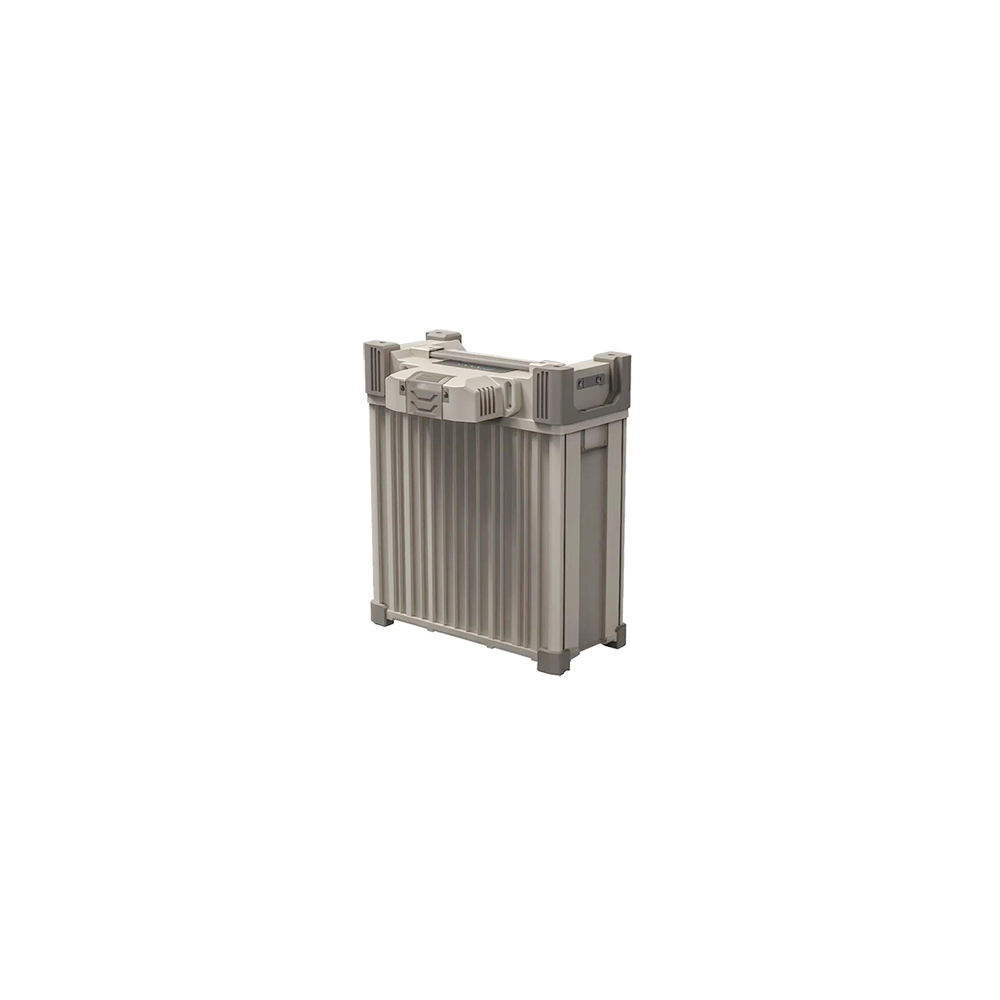
- Cell or pouch restraint: The structure supports cells without harmful compression, abrasion or movement.
- Terminal insulation: Barriers protect energized parts from the enclosure, fasteners and service contact.
- Impact protection: Corners, covers and mounting points protect the battery during handling and hard landings.
- Pressure and swelling allowance: Pouch-based designs need controlled support and approved space for cell behavior.
- Ingress control: Seals and connector choices follow real rain, dust and washing exposure.
- Thermal path: A sealed or rugged enclosure must still release heat generated during flight and charging.
Drone Battery Connectors, Cables and Power Interface
Drone battery connectors are selected from maximum voltage, continuous current, peak current, contact resistance, polarity protection, locking, mating cycles and installation space. XT-series, AS-series, QS-series, circular connectors and project-specific interfaces may be considered, but the exact part number must be approved for the load and service method.
Cable gauge is only one part of conductor design. Cable length, insulation temperature rating, flexibility, termination quality, bend radius and airflow also affect voltage drop and heat. Power and balance or communication wiring need strain relief so repeated battery changes do not transfer force into internal connections.
BMS, Balance Leads and Smart Drone Batteries
Drone packs do not all use the same protection architecture. Some high-power LiPo systems rely on a balance connector and an approved external charger, while industrial smart batteries can include a BMS, current measurement, temperature sensors, state-of-charge estimation and communication with the aircraft or charging station.
- Cell-group voltage monitoring and balancing
- Charge and discharge temperature limits
- Current measurement and remaining-energy estimation
- Overvoltage, undervoltage and overcurrent response where required
- CAN, RS485, UART, SMBus or project-specific communication
- Cycle count, event history and maintenance information
- Charger enable, identification and battery authentication functions
Adding a BMS affects weight, resistance, heat and failure response. A protection board must not be chosen only from its advertised current rating. The architecture is agreed with the flight-control and charger teams so that low-voltage alarms, current limits and shutdown behavior do not create an unsafe in-flight interruption.
Drone Battery Charger and Field Charging
A drone battery charger must match chemistry, series count, maximum charge voltage, charge current, balance or communication method and connector pinout. Connector compatibility alone does not make a charger safe or suitable. High-power charging also requires review of cable temperature, connector life, cell temperature and available cooling.
Fleet planning should include the number of packs, charging stations, turnaround time and daily mission schedule. Faster charging can reduce the number of batteries needed, but it may increase heat or shorten service life if the cell is used outside its approved limits. Storage state of charge, inspection intervals and damaged-battery handling should be documented for operators.
Temperature, Altitude and Outdoor Conditions
Cold temperature can reduce available power and increase voltage sag. Charging at low temperature may require stricter limits or controlled heating. High ambient temperature, solar exposure and repeated flights can reduce cooling time between missions. Altitude changes air density and cooling performance while also changing the propulsion power needed for the aircraft.
For outdoor drones, water and dust exposure should be defined by the real operating scenario. A sealed enclosure can protect against ingress but also trap heat. If the project requires cold-weather operation, review our custom low-temperature lithium battery pack engineering page. The cell, charger, insulation and enclosure must be evaluated as one system.
Custom Drone Battery Pack Specification Framework
| Item | Typical custom direction | Engineering basis |
|---|---|---|
| Nominal voltage | Approximately 11.1V to 66.6V; other platforms reviewed separately | Motor, ESC, flight-controller and charger voltage window |
| Capacity and energy | Project-specific Ah and Wh | Flight-time target, reserve, payload, pack weight and measured power |
| Chemistry | High-rate LiPo, cylindrical Li-ion or LiFePO4 where suitable | Power, energy density, cycle life, temperature and mechanical format |
| Current capability | Defined continuous and peak current with duration | Flight log, cell data, voltage sag, heat and conductor limits |
| Monitoring | Balance leads, basic protection or smart BMS communication | Aircraft interface, charger, fleet maintenance and fault response |
| Mechanical structure | Lightweight wrap, reinforced case, plastic or metal enclosure | Mass limit, battery bay, mounting, vibration, impact and ingress exposure |
| Connector and wiring | High-current power connector plus balance or communication interface | Voltage, current, contact resistance, locking, cable direction and swap cycles |
| Documentation | UN 38.3 planning and test summary, SDS/MSDS, labels and application-specific review | Final configuration, transport method, battery energy and destination market |
Published voltage and chemistry ranges are starting points. The production specification is confirmed after the aircraft voltage window, exact cell, series-parallel layout, current profile, thermal result, charger and mechanical design have been reviewed together.
Prototype and Flight Validation
Bench testing is completed before controlled aircraft trials, but a bench result cannot replace actual flight validation. The approved plan should increase load and mission complexity progressively while recording the parameters needed to explain any alarm, heat or early landing.
- Incoming and assembly checks: Confirm cell identity, voltage consistency, polarity, insulation, connections and pack mass.
- BMS or balance verification: Check cell-group readings, temperature sensors, balancing and communication where fitted.
- Bench-load test: Measure voltage sag and temperatures at continuous and representative peak current.
- Charge validation: Confirm charger voltage, current, balancing, termination and connector temperature.
- Fit and retention test: Verify battery-bay clearance, center of gravity, cable routing, latch and connector engagement.
- Controlled flight test: Record current, voltage, temperature, flight time and alarms with an approved initial payload.
- Mission-profile test: Repeat the actual work cycle, payload, reserve and environmental conditions.
- Repeatability review: Compare several packs and repeated flights before pilot production approval.
Acceptance criteria should be agreed before testing. Our battery quality-control process can be aligned with the prototype plan so cell matching, assembly inspection, aging and final testing support repeat production.
Fleet Consistency and Battery Maintenance Data
For a fleet, consistency between battery packs is as important as the best result from one sample. Cell matching, material control, welding or busbar process, BMS firmware, connector assembly and final testing should follow an approved bill of materials and work instruction.
Useful fleet records can include serial or lot number, cycle count, delivered energy, maximum temperature, minimum voltage under load, cell imbalance and fault events. These records help identify aging trends and define retirement criteria instead of relying only on calendar age.
UN 38.3 and Drone Battery Shipping Documents
Lithium batteries are regulated for transport. UN 38.3 addresses transport testing for lithium cells and batteries, but it is not a complete product-safety certification. The final shipment also depends on battery configuration, watt-hours, whether the battery is shipped alone or with equipment, transport mode, packaging, state-of-charge requirements, labels and current carrier rules.
Documentation support can include an approved specification, UN 38.3 test planning and test summary, SDS/MSDS, labels, inspection records and packaging information. IEC 62133-2 may be relevant to some portable sealed lithium batteries, while the aircraft or finished equipment can require a separate compliance route. Requirements should be confirmed before the production cell and pack structure are frozen.
Information Needed for a Drone Battery Quote
Electrical and flight data
- Nominal, maximum and minimum voltage
- Average and peak current with duration
- Target flight time and reserve policy
- Aircraft mass and normal payload
- Charger model, output and charging-time target
Mechanical and project data
- Battery-bay drawing and maximum pack weight
- Mounting, handle and cable-exit requirements
- Connector model, pinout and photos
- Temperature, altitude and weather exposure
- Prototype quantity, annual forecast and destination market
A representative flight log is especially valuable. If no log is available, provide motor, ESC, propeller, aircraft and payload information together with any existing battery label. The prototype plan can then define which electrical measurements are still needed.
Related Custom Battery Support
Review our complete custom battery pack engineering process, compare project examples in the battery product catalog, evaluate endurance-focused cylindrical designs on our custom 21700 battery pack page, or send your drone voltage, current, weight and flight requirements for an engineering review.
Frequently Asked Questions
Can you make a high-discharge drone battery pack?
Yes. The cell, parallel count, interconnects, wiring, connector and any BMS or protection components are selected from continuous current, peak current, pulse duration, voltage sag and temperature limits. Prototype load and flight testing are required.
Should I choose LiPo or Li-ion for a drone?
LiPo pouch cells are often considered for high power and flexible pack shapes. Cylindrical Li-ion cells can suit endurance-focused designs. The correct choice depends on current, energy, weight, battery-bay shape, temperature, cycle life and verified cell data.
How is drone battery flight time calculated?
A preliminary estimate compares usable battery energy with measured aircraft power, but battery mass changes the power demand. Final flight time must be validated with the intended payload, reserve, mission profile and environmental conditions.
What does the C-rating of a drone battery mean?
C-rating expresses current relative to capacity. A theoretical rating does not confirm pack performance. Continuous and burst current must also stay within verified cell, conductor, connector and temperature limits.
Can the battery shape fit our drone bay?
Yes. Pack shape, handle, mounting, cable direction and connector position can be designed after reviewing the battery-bay drawing, mass limit, center-of-gravity target and service method.
Does a drone battery need a BMS?
It depends on the battery and aircraft architecture. Some high-power LiPo packs use balance leads and an external charger, while industrial smart batteries may use a BMS for monitoring, protection, state-of-charge estimation and communication.
Can you support agricultural and heavy-lift drone batteries?
Yes. These projects require the actual payload, current log, battery mass limit, swap method, connector, weather exposure and daily flight schedule. High-current and structural validation are especially important.
Can a drone battery be charged quickly?
Fast charging may be possible when the selected cell, charger, wiring, connector and cooling support the requested rate. Charging time should be balanced against temperature, cycle life and the number of packs required for fleet operation.
Do drone battery packs need UN 38.3?
Lithium cell and battery types offered for transport generally need to meet the applicable UN 38.3 requirements. Shipment rules also depend on watt-hours, configuration, transport mode, packaging, labels and current carrier requirements.
What should I send before prototype development?
Send the voltage window, current log, flight-time target, aircraft and payload mass, battery-bay drawing, pack-weight limit, connector, charger, operating environment, prototype quantity and destination market.